Britain’s random drugs policy

Posted 8 May, 2008 by Andrew Curry
Categories: blindspot, crime, politics, research, science

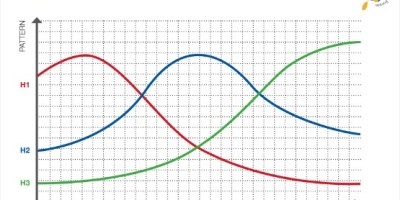
The decision by the British Home Secretary Jacqui Smith to reclassify cannabis as a Category B drug, despite the opposing views of her expert advisers, has reminded me of the chaotic state of Britain’s drugs policy. It is an area where policy has remained completely immune to evidence - as one ‘killer chart’ demonstrates.

Read the rest of this post »

The impact of global organised crime

Posted 4 May, 2008 by Andrew Curry
Categories: blindspot, books, business, crime, economics, finance, global

One of the observations of last year’s State of the Future report (which I blogged about here) was that organised crime was one of the the three biggest threats to global security and prosperity. Misha Glenny’s new book McMafia (’a journey through the global criminal underworld’) comes to a similar conclusion - arguing that organised crime is a bigger threat than terrorism.

Read the rest of this post »

Mobile money - from Africa to the UK?

Posted 28 April, 2008 by Andrew Curry
Categories: banks, business, digital, finance, innovation, technology, trends

Kenya’s mobile phone-enabled payment system M-Pesa has grown explosively over the last nine months, according to Russell Southwood’s Balancing Act newsletter, which has been tracking the African mobile and internet markets for something like four years now. According to the newsletter the operator, Safaricom, gained 150,000 users in the three months to June last year, topped the million mark by December, and had reached 1.6m by January - despite, or perhaps because of, the country’s election-related violence. [Update: Now 2m - see Comment below]. Southwood describes it as a ‘breakthrough moment’ for mobile payments - one that’s being watched in the UK.

Read the rest of this post »

Important machines in history

Posted 26 April, 2008 by Andrew Curry
Categories: books, global, history, time, trade

I visited the recently refurbished Royal Observatory at Greenwich last weekend, where there is, inevitably, a whole section devoted to Harrison and his clock-based solution to the ‘longitude problem’. (The story of his fight with the Astronomer Royal, Neville Maskelyne, and the astronomy establishment, which preferred the so-called ‘lunar solution’, is famouly told by Dava Sobel in her book ‘Longitude’.) But the reason for posting is that the Observatory describes Harrison’s fourth clock, the H-4 pocket watch, as “one of the most important machines ever made”.

Read the rest of this post »

Scoring the impending global crisis: population

Posted 24 April, 2008 by Andrew Curry
Categories: gender, global, social, trends

The ‘grand problematique’ is a phrase sometimes used in futures works to describe that coming collision of population increase, food supply issues, energy shortage, and climate change impact - which, it’s said, could be making our lives hell by 2030. (Colin Mason called it the ‘2030 Spike‘). There has been a wave of related reports and news stories on this recently, so I thought it would be worth running a quick score. I’m planning a series of posts covering off the stories I’ve noticed - starting with population.

Read the rest of this post »

Banks and chutzpah

Posted 16 April, 2008 by Andrew Curry
Categories: economics, emerging issues, trends

I’ve been trying to stay away from the banking crisis, which is a big fast-moving story which has been well-covered elsewhere. But some of the events of the past few days have reminded me of the story about the definition of chutzpah: the boy who kills his parents and then throws himself on the mercy of the court because he is an orphan.

Read the rest of this post »

Making the Transition locally

Posted 9 April, 2008 by Andrew Curry
Categories: books, climate change, emerging issues, environment, future, sustainability

I’ve meant to write before about the Transition Initiative, which is in my view one of the most radical things happening in the UK at the moment - radical because it is local and community-oriented, radical because it is a thought-through response to both impending energy shortage and climate change. (If only the government was as coherent). Now the movement’s ‘founder’, Rob Hopkins, has written a book which is a combination of handbook, textbook, and manifesto.
Read the rest of this post »

Arthur C Clarke and our ‘future in space’

Posted 6 April, 2008 by Andrew Curry
Categories: books, future, space, technology

The death of Arthur C Clarke at the age of 90 reminded me of a post I’ve been thinking about for a few weeks now, about our certainty in the 1950s and 60s that in the future we would have interstellar travel and colonies in space. That future may still exist, although to my mind it seems less likely now. Why didn’t it arrive? Partly - but only partly - because we blew the money on the Cold War instead.

Read the rest of this post »

Alternative histories, alternative pasts

Posted 3 April, 2008 by Andrew Curry
Categories: books, history, long waves, technology

I’ve been reading Keith Roberts’ 1960s SF novel Pavane, set in a modern England in which Elizabeth I had been assassinated in 1588, the Spanish Armada had succeeded, and the Catholic Church had triumphed - in England and in the rest of northern Europe. At the start of the novel, the grip of the Church is tight; and England is poor and essentially feudal.

Read the rest of this post »

How globalisation ends - or not

Posted 26 March, 2008 by Andrew Curry
Categories: global, politics, security, trends

I posted a couple of weeks ago on a paper by a couple of economists which argued in brief, that globalisation - taking a historical view - tended to fail for political reasons: effectivedly, those who lose from it put the brakes on. Cross-posting this to Shaping Tomorrow’s Foresight Network prompted a long and considered response by the futurist Stephen Aguilar-Millan of the European Futures Observatory (his blog here), who has done recent work on questions of globalisation. He argued that if you approach it from a geopolitical perspective you get a rather different perspective.

Read the rest of this post »